The Challenge
The Idaho Department of Health and Welfare (DHW) relied on an aging, largely manual system to manage tobacco retail permits across the state. While compliance rates for obtaining permits were high, the system fell short in several critical areas: ensuring consistent inspection workflows, meeting federal Synar requirements, and providing transparency to the public.
Key pain points included:
- Fragmented user experiences for permit holders, inspectors, and administrators
- Lack of real-time integration with payment systems like Access Idaho
- No centralized reporting to support decision-making or federal compliance
DHW needed a modern, mobile-responsive platform that could streamline permit lifecycle management, improve operational efficiency, and enhance public access to information.
Our Approach
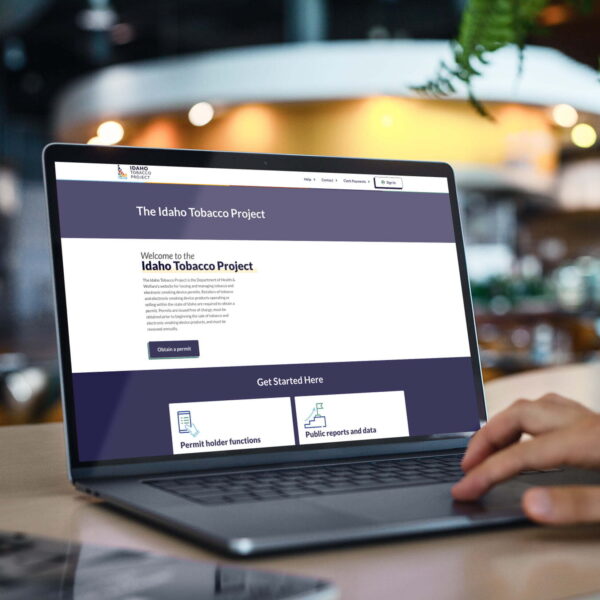
We delivered a mobile-responsive and accessible platform that modernized the full permit lifecycle and compliance workflows:
- Unified Experience: Role-based access for public users, permit holders, inspectors, and admins
- Permit Management: Streamlined application, renewal, and real-time permit generation
- Inspection Digitization: In-system inspection logging, citations, and document uploads
- Compliance Support: Synar workflows supported via export/import and system flagging
- Reporting & Transparency: Public reports, business lookup, and exportable admin data
- Admin Controls: Manual enforcement actions, audit logs, and user management
Built using an agile project management approach, the system was iteratively refined with stakeholder feedback.

The Result
This initiative aligned closely with DHW’s broader mission to protect public health and ensure responsible retail practices.
- Faster permit processing and reduced manual work
- Improved compliance tracking and Synar reporting readiness as well as better user experience with self-service capabilities
- Increased public transparency through accessible data
By modernizing its tobacco permitting system, DHW strengthened its ability to:
- Enforce regulations consistently across the state
- Support data-driven decision-making
- Meet federal compliance requirements efficiently
- Improve engagement with retailers and the public
The solution also reflects a strategic shift toward digital government services that prioritize accessibility, transparency, and operational resilience. Ultimately, the platform positions DHW to adapt to future regulatory changes while maintaining high standards of compliance and public trust.