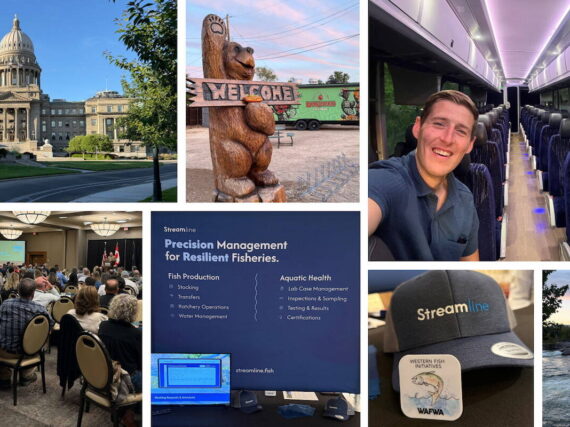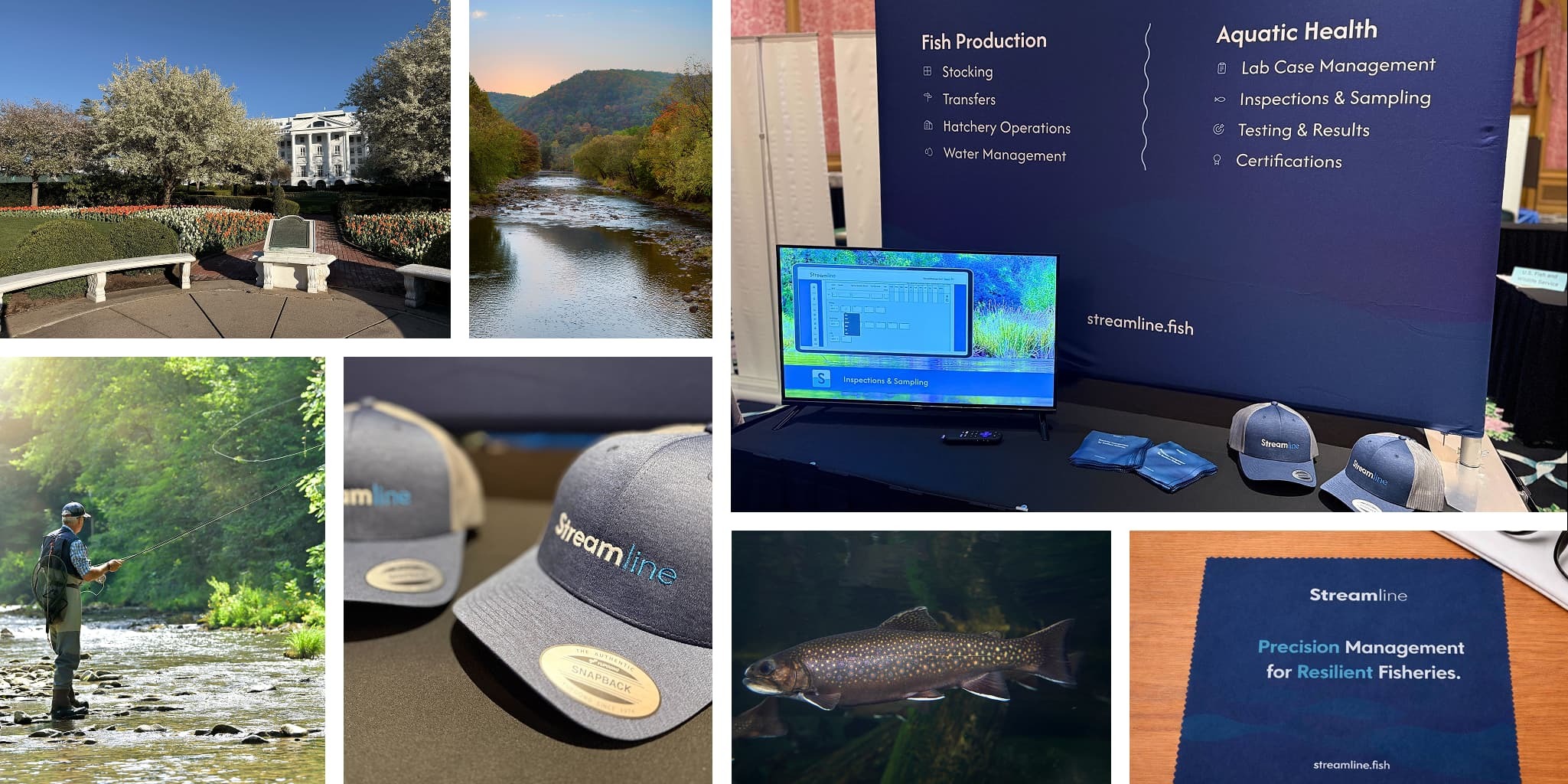

There’s a fascinating contrast between the polished, historic halls of the Greenbrier Resort in West Virginia and the rugged, boots-on-the-ground reality of wildlife conservation. Yet, nestled in the Greenbrier Valley against the Allegheny Mountains, it proved to be an ideal backdrop for discussing fisheries management at the Northeast Association of Fish and Wildlife Agencies conference this past week.
I’ll be honest: stepping into a room with over 400 attendees from 13 states, D.C., and seven Canadian provinces was a little intimidating. We are relatively new to the world of fisheries management, and while much of what was discussed over the week is likely common knowledge to the seasoned professionals who have dedicated their lives to this work, for me, it was a huge educational opportunity.
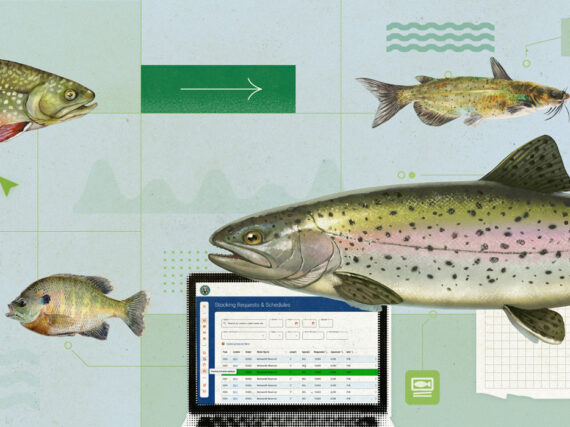
We attended this event primarily to get the word out about Streamline, our newly developed fish hatchery management and health platform. Beyond the marketing efforts, this was a listening tour.
We are actively learning about where we fit into this broader space, and walking the conference floor gave me a firsthand look at the daily operational realities, shifting priorities, and distinct challenges facing fisheries management leaders.
Following the funding
If there was a common theme to many of the presentations, it was the hurdle of funding. As someone just getting their bearings in the industry, I was highly curious about the actual mechanics of how conservation dollars reach the streams and forests that need them most. With this in mind, I sat in on a session led by the National Fish and Wildlife Foundation (NFWF) to better understand the pipeline.
Operating as an independent, private non-profit created by Congress in 1984, the NFWF essentially acts as a bridge. By leveraging public-private partnerships, they funnel private conservation dollars directly into environmental needs, supporting the core mission of the U.S. Fish and Wildlife Service. To a newcomer, the sheer scale of coordination required to distribute tens of millions of dollars annually is staggering.
They administer several highly impactful grant programs across the Northeast to restore watersheds, enhance habitats, and build coastal resilience. Programs such as the Northeast Forests and Rivers Fund, the Delaware River Program, and the Chesapeake Bay Stewardship Fund aren’t just abstract initiatives. They’re engines. They take in federal support, corporate partnerships, and local priorities, and turn them into real, physical change on the landscape.
Collectively, these programs manage to unite federal agencies with corporate sponsors. Executing a complex balancing act that fosters long-term ecological vitality across our region in a dynamic human and climatological environment.
As Amanda Bassow, Director of NFWF’s Northeast Region put it on Facebook, “Sustainability to me is more of a direction than an end point. It’s about striving to live in ways that protect diverse, resilient ecosystems that can adapt to a changing climate.”
The brook trout as a barometer
Given our company’s roots in Maine and our natural affinity for all things aquatic, my curiosity pulled me toward a series of deep-dive presentations on native brook trout, and nowhere did Amanda’s words ring more true.
Something that might be “Wildlife Biology 101” to most attendees, but was a fascinating realization for me, is the brook trout’s role as a bellwether species. Because they demand pristine, cold, and highly oxygenated water, their presence is a highly reliable barometer for the overall health of a watershed.
When conservationists design projects to protect brook trout, the entire ecosystem wins. Restoring a stream for brook trout inherently restores it for the macroinvertebrates, amphibians, and native flora that share the neighborhood.
But it’s a precarious neighborhood. In an era of warming temperatures, brook trout are the proverbial canary in the coal mine for cold-water ecosystems. They are incredibly sensitive to thermal stress. Looking at the data mapping of their changing distribution, you can see the cold-water refuges shrinking in real-time, isolating populations in high-elevation headwater streams. Protecting them now requires forward-looking resilience strategies, specifically prioritizing the reconnection of fragmented habitats so these fish can actually migrate to cooler waters during extreme heat.
Frontline optimism from Trout Unlimited
I learned that the upper Northeast, in particular Maine, upstate New York, and parts of northern New England, remains the most robust stronghold for native brook trout in the country. But “stable” doesn’t mean “immune.” These northern populations have largely been pushed out of lower river valleys and restricted to remote areas entirely due to the human footprint: aging dams, culverts, historical logging, urbanization, and agricultural runoff.
Hearing about the scale of habitat fragmentation, I realized it would be easy for an outsider to feel cynical. However, the prevailing mood in the room wasn’t bleak at all. There were incredible bright spots where state agencies, federal groups, and organizations like Trout Unlimited had successfully collaborated with private landowners to restore habitats, resulting in marked, measurable growth in trout populations.
Dustin Wichterman, Associate Director at Trout Unlimited, described the efforts of their 19-year effort restoring the headwaters of the Potomac in West Virginia. “This is the largest square mileage of genetically interconnected brook trout that you will see,” he said in an article about the project. “The data shows that where we restore these streams, they persist, even in the face of climate change. Climate change is concerning, but we’re working in the best of the best [brook trout habitat].”
My takeaways
The overarching takeaway from the week was the absolute necessity of holistic fisheries management. We need a careful, coordinated combination of re-stocking, physical habitat restoration, and rigorous water quality monitoring.
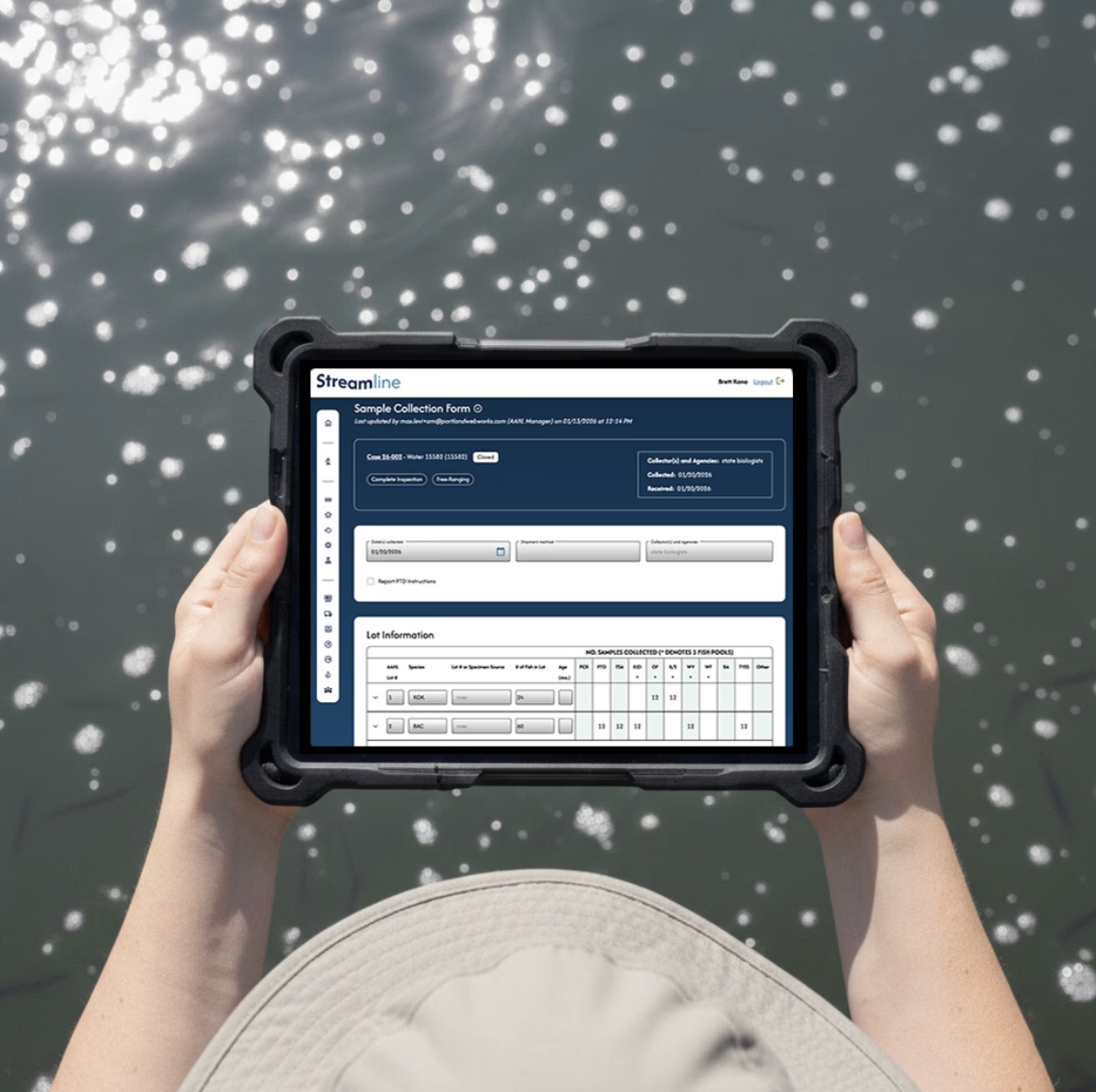
Since the conference, we’ve been looking more deeply at exactly how Streamline’s hatchery management technology fits into this massive ecosystem. We provide just one piece of a very complex puzzle, but with each interaction with the fisheries communities, we are learning more about how technology can help agencies to achieve the goals at hand. It was incredibly humbling and heartening to spend the week learning from the passionate, dedicated people on the front lines who are putting that puzzle together.
Please reach out with any questions or other opportunities for sponsorship and learning. We appreciate the support of the fishery community.
Learn more
- Visit Streamline: A smarter platform for fish production and aquatic health
- Modernizing Fish Hatchery Operations: How Colorado Parks and Wildlife is transforming hatchery and fish health management with COFish
- Contact us for a free demo of Streamline